

25/10/2026
Category: Cruises
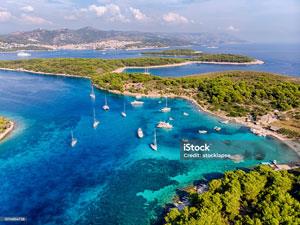
If you are traveling from the United States to Croatia and want to experience the Adriatic Sea in comfort, privacy and style, a motor yacht charter in Croatia is one of the best ways to discover the country's spectacular coastline and islands.
Croatia offers an extraordinary combination of historic cities, crystal-clear water, secluded bays, Mediterranean villages, national parks and more than a thousand islands and islets. Instead of moving between hotels and ferries, a private yacht charter in Croatia lets you keep your accommodation, luggage, crew and personal space with you as you travel from one destination to the next.
For American couples, families, honeymooners, multigenerational groups and luxury travelers, a luxury yacht charter in Croatia can combine the best of a private villa, a five-star hotel and a customized Mediterranean adventure. Popular routes include Split to Dubrovnik, Dubrovnik to Split, Hvar, Brač, Vis, Korčula, Mljet and the Elaphiti Islands.
A motor yacht is particularly attractive if you want to experience several Croatian islands during a one-week vacation. It can cover longer distances efficiently, which gives you more flexibility to combine destinations. You might begin in Split, swim near Brač, spend an evening in Hvar, discover the Blue Cave around Vis, explore Korčula, relax in Mljet National Park and finish in Dubrovnik.
This is the appeal of a Croatia yacht charter: the journey between destinations becomes part of the vacation. Instead of hotel, luggage, ferry, taxi, hotel and more luggage, you enjoy a private transfer, your yacht and the Croatian islands. Your cabin remains yours throughout the trip, while the captain and crew manage navigation and onboard service.
For visitors coming from the United States, Croatia is particularly attractive because an Adriatic yacht vacation combines easily with cultural travel through Europe. Many American travelers build their itinerary around Dubrovnik and Split, spending a few nights in each city before or after the charter. Depending on your international flight schedule, you may choose to:
The two most important starting points for many luxury itineraries are Split and Dubrovnik. For other Croatia yacht charter itineraries and Mediterranean destinations, see our destinations pages.
A Split yacht charter provides excellent access to the central Dalmatian islands. From Split you can explore Brač, Hvar, Vis, Šolta, Korčula, the Pakleni Islands, the Blue Lagoon and Trogir. Split is also convenient for travelers arriving at Split Airport who want to board their yacht quickly, which makes it a practical starting point if you want to maximize time on the water. The city itself is worth exploring, especially the historic center around Diocletian's Palace.
A Dubrovnik yacht charter offers a spectacular combination of history, architecture and island cruising. Dubrovnik's historic Old Town is one of Croatia's most recognizable destinations, while the surrounding Adriatic gives access to the Elaphiti Islands and southern Dalmatia. A charter beginning in Dubrovnik can include Šipan, Lopud, Koločep, Mljet, Korčula, Lastovo, Hvar and Vis, so a private yacht charter from Dubrovnik combines sightseeing on land with secluded swimming and island exploration.
A Hvar yacht charter is one of the most popular choices for travelers who want luxury, nightlife, beaches and beautiful scenery. Hvar Town has an energetic atmosphere, excellent restaurants and a sophisticated evening scene, while the nearby Pakleni Islands offer quiet bays and clear water for swimming and snorkeling. A private motor yacht lets you enjoy the social scene without making it the only focus of your vacation.
Vis has a different atmosphere from Hvar. It is more remote and less developed, and it appeals to travelers who want nature, hidden bays and authentic island scenery. One of the most famous experiences is the Blue Cave on Biševo, usually combined with other nearby swimming and sightseeing stops. A motor yacht lets you build Vis into a broader itinerary instead of treating it as a separate excursion, and you can pair famous attractions with less crowded anchorages.
Korčula is known for its historic Old Town, stone architecture, Mediterranean atmosphere and surrounding islands. A Korčula yacht charter can combine time in the old town with swimming, restaurants and secluded coves. The island works particularly well on a Dubrovnik-to-Split route because it connects southern and central Dalmatia, and it is an excellent place to add local food and wine experiences to a private itinerary.
For nature lovers, Mljet is one of the highlights of southern Croatia. The island is famous for its national park, forests, saltwater lakes and peaceful atmosphere. Instead of spending the day in a busy port, your yacht becomes a private base from which to explore, which makes Mljet ideal for a slower day in an otherwise active itinerary.
Brač is famous for the Zlatni Rat beach and offers many beautiful swimming locations, which makes it a natural first stop on a cruise from Split.
Šolta is a quieter alternative to some of the better-known islands and works well as a relaxed stop close to Split.
The Elaphiti Islands, including Šipan, Lopud and Koločep, are particularly convenient for a Dubrovnik-based itinerary and are ideal for a gentle first or last day on board.
One of the most valuable searches is for a one-way route between the two main cities. A Dubrovnik to Split yacht charter is especially attractive to American travelers because it lets you experience two of Croatia's most important cities without returning to your starting point. The reverse route, a Split to Dubrovnik yacht charter, is equally appealing. One possible 7-day itinerary from Split looks like this:
This is only a sample, and the exact route depends on the yacht, weather, cruising speed and your preferences. Your captain should have the flexibility to adjust the itinerary to sea conditions and local circumstances. A one-way charter also saves valuable vacation time because you do not need to retrace the same route.
The right choice depends on the experience you want. Choose a motor yacht if you want speed, multiple destinations, air conditioning, luxury interiors, large outdoor spaces, water toys, longer cruising distances and maximum itinerary flexibility. Choose a sailing yacht if the experience of sailing, a quieter pace and a stronger connection with the sea are central to your vacation. A catamaran is a popular choice for families and groups who value stability and generous living space. For an American traveler with only seven days in Croatia who wants to combine several islands, a motor yacht usually provides the most flexibility.
For most Americans looking for a luxury vacation, a crewed yacht charter in Croatia is the easiest and most relaxing option. Depending on the yacht, the crew may include a captain, chef, stewardesses, deckhands and an engineer, and they take care of navigation, docking, anchoring, provisioning, cooking, housekeeping, water sports, local recommendations, restaurant reservations and daily itinerary adjustments. The experience is much closer to a private floating hotel than a simple boat rental.
A luxury motor yacht charter in Croatia can range from a sophisticated private motor yacht for a family or small group to a full superyacht experience with an extensive crew. Every contract is different, so confirm the details before booking. Depending on the yacht, you may have:
Large yachts may also offer a gym, spa, cinema, beach club and an extensive collection of water toys. The most important consideration is not yacht length, but whether the yacht fits your group, itinerary, cruising area and preferred level of service.
One of the most common questions is how much a yacht charter in Croatia costs. There is no single answer. Croatia yacht charter prices depend on yacht length, age and builder, number of cabins and guests, crew, season, charter duration, embarkation port, fuel consumption, marina and port costs, food and beverages, water toys, VAT, APA and special requests.
As a general guide, smaller crewed motor yachts start in the low tens of thousands of euros per week, while large luxury motor yachts and superyachts can reach well into six figures per week, before additional expenses. These figures are examples, not fixed market rates. When comparing prices, do not look only at the headline weekly rate; ask for a complete estimated charter budget.
American travelers new to yacht chartering may see the term APA, or Advance Provisioning Allowance. It is an advance amount used to cover certain charter expenses, depending on the contract, such as fuel, food, beverages, port and marina fees, special provisions and other operating expenses. The exact structure varies between yachts. When requesting a quote, ask for the base charter rate plus VAT, APA and expected additional expenses, which gives you a much clearer picture of the real vacation cost.
Because tax treatment and contract terms can change, ask for a detailed explanation of the following before you sign:
Understanding these details before signing the charter agreement makes it much easier to compare different yachts.
The Croatian yacht charter season generally runs through the warmer months, with many operators offering charters from approximately May through October. June through September is the core summer period, while July and August are peak season and can be especially busy around popular destinations such as Hvar and Dubrovnik. May and September can be attractive for travelers who prefer fewer crowds while still enjoying warm Mediterranean conditions, so a September charter is an interesting option for travelers with flexible dates.
If you have fixed dates in July or August, book early, especially if you want a specific motor yacht, a particular number of cabins, a large superyacht, a specific captain or crew, a one-way Dubrovnik-to-Split or Split-to-Dubrovnik route, a honeymoon date or a multigenerational family charter. Premium yachts and popular summer dates can become limited well in advance.
Entry requirements can change, so check them before booking your flights and yacht. The information below reflects official sources as of November 2026.
Croatia is part of the Schengen Area. For ordinary tourism or business visits of up to 90 days, U.S. citizens generally do not need a visa. The 90-day limit applies across the whole Schengen Area, not just Croatia, so time spent in Italy, Greece, France, Spain or another Schengen country counts toward the same limit (90 days within any 180-day period). Montenegro is not part of the Schengen Area, so check its separate entry rules if you plan to include it. Longer stays may require a visa and additional procedures.
For travel to the Schengen Area, your passport should generally remain valid for at least three months beyond your planned departure from the Schengen Area, and the U.S. Department of State recommends six months of validity as an added precaution. Do not wait until the last few weeks before your yacht vacation to discover that your passport needs renewal.
You may be asked to show the purpose and conditions of your stay, sufficient funds and arrangements for returning or continuing your journey. For a yacht charter, keep copies of your return or onward flights, yacht charter confirmation, hotel reservations, travel insurance and any domestic flight reservations.
The European Travel Information and Authorisation System (ETIAS) is a planned travel authorization for visa-exempt travelers, including U.S. citizens, visiting Croatia and other participating countries for short stays. It was previously expected to start in late 2026, but the official EU website now states that ETIAS is not currently in operation and that the EU will announce the specific start date several months before launch. At the moment, no ETIAS step is required. ETIAS is not a visa, and the planned fee is €20.
The EU's Entry/Exit System (EES) is already operational: it became fully operational at the external borders of participating European countries on April 10, 2026. It records the entries and exits of non-EU nationals and can involve digital registration of passport data and biometric data such as a facial image and fingerprints. It does not change the basic 90-days-in-180-days short-stay rule, only how border crossings are recorded.
Because these rules are changing, re-check the official sources shortly before departure: the U.S. Department of State's Croatia travel information and the official EU ETIAS website, rather than third-party application sites.
For children traveling without both parents or legal guardians, additional documentation may sometimes be necessary, so verify the requirements for your specific family situation before departure.
Most American travelers fly into Dubrovnik or Split, often with a connection in a major European city, and continue to the marina by private transfer. A professional charter concierge can coordinate the transfer around the yacht's actual embarkation location. For travelers crossing the Atlantic, a charter of 7 to 10 days is an excellent balance between travel time and exploration, and you can add a few nights in Dubrovnik, Split or another European city before or after the yacht.
A family yacht charter in Croatia makes traveling with children and several generations considerably easier: everyone stays on the same yacht while the crew handles much of the daily logistics. Children enjoy swimming, snorkeling, paddleboarding, water toys, fishing, beaches and island exploration, while parents enjoy restaurants, wine, sightseeing and quiet time. For multigenerational groups, choose a yacht with enough cabins, spacious common areas and an experienced crew.
Croatia is also an excellent destination for a honeymoon yacht charter. A private yacht lets couples combine Dubrovnik, Hvar, Vis, Korčula and secluded bays without changing hotels every night: swim in the morning, have lunch on deck, explore a historic town in the afternoon and finish with a private sunset dinner. For honeymooners, the best itinerary is often not the one that visits the most islands, but the one with the right balance between exploration and privacy.
Pack lightweight clothing, swimwear, sun protection, a hat, sunglasses, comfortable walking shoes, one or two smarter outfits for restaurants, motion-sickness medication if needed and a reusable water bottle. Soft luggage is easier to store than large hard-shell suitcases. Croatia uses 230-volt electricity and European-style outlets, so bring an adapter and check that your electronics support the voltage.
Croatia uses the euro. Major hotels, restaurants and marinas generally accept international credit cards, but carry some euros for smaller purchases and check foreign-transaction fees. Your charter contract should clearly explain how the charter fee, APA, deposits and other expenses are handled. A professional crew is also one of the most important safety advantages of a luxury charter: the captain monitors weather, sea conditions, anchorages, marina access and tender operations, and should recommend a better alternative if conditions make a destination unsuitable.
A motor yacht charter in Croatia is more than a way to get from one island to another. It is a private Mediterranean vacation where the itinerary, pace and onboard experience are built around you. For first-time visitors from the United States, a Dubrovnik-to-Split or Split-to-Dubrovnik charter is an excellent way to experience the Dalmatian Coast. Hvar is the obvious highlight for nightlife and luxury, Vis and Mljet offer a different, more natural side of Croatia, and Dubrovnik, Split and Korčula provide unforgettable history and culture.
The best Croatian yacht charter is not necessarily the largest or most expensive yacht. It is the yacht with the right size, crew, itinerary, amenities and cruising capabilities for your group. From your first swim in the Adriatic to your final evening overlooking Dubrovnik's historic walls, Croatia is a destination best experienced at your own pace.
1. Where is the best place to start a yacht charter in Croatia?
Split and Dubrovnik are the two main starting points. Split gives quick access to Brač, Hvar and Vis, while Dubrovnik gives access to the Elaphiti Islands, Mljet and Korčula. Many Americans choose a one-way route between the two.
2. How much does a yacht charter in Croatia cost?
Smaller crewed motor yachts start in the low tens of thousands of euros per week, and large luxury yachts can cost well into six figures. Always ask for the base rate plus VAT, APA and estimated expenses.
3. Do Americans need a visa to charter a yacht in Croatia?
U.S. citizens generally do not need a visa for stays of up to 90 days within any 180-day period in the Schengen Area. Check the official sources shortly before departure.
4. Do I need ETIAS to travel to Croatia?
Not at the moment. ETIAS is not yet in operation and no start date has been announced, so re-check the official EU ETIAS website before you travel.
5. When is the best time for a yacht charter in Croatia?
The season runs from about May to October, with June through September the core period and July and August the busiest. May and September can offer fewer crowds.
Alpha Yachting Greece offers crewed yacht charters in the Greek Islands and the Mediterranean, with luxury yachts and professional crews. Planning your first trip? Read our first-timer's guide or the best yacht charter route in Greece, or contact us for availability and a personalized proposal.
Main offices in Greece:
67 Posidonos Ave, 16674, Glyfada, POBox 358, Athens - Greece
2B Esperidon Sq., 16674, Glyfada, POBox 358, Athens – Greece
Tel. +30-210-968-0486
Mobile: +306974788888
WhatsApp: +306974788888
Viber: +306974788888
Email: info@alphayachting.com
Branch office in USA:
5497 Wiles Road, Suite 202
Coconut Creek, FL 33073
Tel. +1-954-234-2203
Email: info@alphayachting.com

Main offices in Greece:
67 Posidonos Ave, 16674, Glyfada
2B Esperidon Sq., 16674, Glyfada
P.O.Box 358
Athens - Greece
Tel. +30-210-968-0486
Mobile: +306974788888
WhatsApp: +306974788888
Viber: +306974788888
Email: info@alphayachting.com
Branch office in USA:
5497 Wiles Road, Suite 202
Coconut Creek, FL 33073
Tel. +1-954-234-2203
Email: info@alphayachting.com


 FAVORITES
 REVIEWS ALPHA YACHTING CHARTERS
 FAQS