

22/10/2026
Category: Cruises
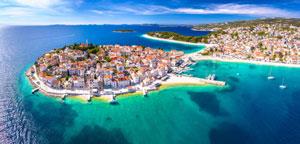
Imagine flying from the UK in the morning, landing in Split a few hours later and stepping aboard your own private yacht on the Adriatic. If you are planning a yacht charter in Croatia from the UK, that evening you will not be checking into a hotel, unpacking and planning tomorrow's ferry: you will be swimming from your yacht in a secluded bay and enjoying dinner on deck as the sun disappears behind the islands.
A crewed yacht charter in Croatia is almost perfectly suited to a private holiday. Hundreds of islands and islets, historic stone towns, sheltered bays, clear Adriatic water and relatively short distances between destinations make it possible to combine several of Croatia's highlights in a single week, from Hvar and Vis to Korčula, Mljet and Dubrovnik.
For British travellers, Croatia is also very accessible. Flights from the UK to Split take roughly two to two and a half hours, and in summer there are direct services to Split, Dubrovnik and Zadar from London and several regional airports, so you can often fly close to your yacht's embarkation port. The result is one of Europe's easiest luxury yacht escapes from Britain.
A Croatian yacht holiday is about much more than transportation. Your yacht becomes your private hotel, restaurant, beach club, water-sports platform and transport between the islands, and unlike a conventional Croatian holiday you can wake up somewhere new every morning without changing rooms.
For a group of friends or a family travelling together from Britain, this can turn a normal Mediterranean holiday into a genuinely private experience. The main advantages include:
For British travellers, the simplest strategy is usually to look at flight options first and then choose the yacht's embarkation port. Direct services are seasonal and schedules vary by airline, airport and date, so check current timetables before booking.
A professional charter broker can coordinate transfers around your flight times and the yacht's actual embarkation location.
For most first-time visitors, the answer is Dalmatia, but the right starting point depends on the experience you want. For more ideas, see our page on Croatia yacht charter destinations.
A Central Dalmatia yacht charter is the classic Croatian sailing holiday. From Split and Trogir you can reach Brač, Šolta, Hvar, the Pakleni Islands and Vis within easy cruising distances. It combines Roman history, beaches, nightlife, restaurants and secluded bays, and suits first-time visitors, couples, families and groups of friends.
A Southern Dalmatia yacht charter takes you to medieval Korčula, Lastovo, the national park on Mljet, the Elaphiti Islands of Šipan and Lopud, and the UNESCO-listed Old Town of Dubrovnik. It suits travellers who want history, food, wine and nature in one itinerary, and it works particularly well as part of a one-way charter from Split.
Further north, the area around Zadar, the Kornati Islands, Šibenik, Primošten and the Krka waterfalls offers a quieter, more rugged landscape with many anchorages. It is a good choice for repeat visitors and for travellers who prefer a more untouched coastline.
Istria and the Kvarner Gulf, including Pula, Rovinj, Opatija, Cres and Lošinj, are a different side of Croatia, with Roman and Venetian heritage, fishing towns and excellent gastronomy. They suit travellers who want a shorter flight from the UK and a less traditional island-hopping holiday.
A good itinerary is not simply a list of islands. The best Croatia yacht charter itinerary balances cruising time with swimming, sightseeing, restaurants and time to enjoy the yacht itself. Your captain should always keep flexibility, because wind, sea conditions and marina availability can change the ideal route. Here are three attractive options for UK travellers.
The classic one-way Croatian route, best for first-time visitors, couples, families and groups of friends. Duration: 7 nights. Starting point: Split. Ending point: Dubrovnik. Region: Dalmatian coast.
Not every traveller wants a one-way charter. A round trip is best for easier flight planning, no one-way repositioning, flexibility if the weather changes and a first yacht charter. Duration: 7 nights. Region: Central Dalmatia. Starting and ending point: Split.
The trade-off is that you cannot comfortably add Dubrovnik to this itinerary in one week without increasing cruising time.
If your schedule allows ten days, the Croatian Adriatic becomes considerably more relaxed. Duration: 10 nights. Region: Dalmatian coast. A strong route is Split, Brač, Hvar, Vis, Korčula, Lastovo, Mljet, the Elaphiti Islands and Dubrovnik.
Choosing the right type of yacht is one of the most important decisions when planning a Croatian yacht holiday.
A motor yacht is generally the best choice if you want to cover more of the Dalmatian coast in a week, make the Split to Dubrovnik crossing comfortably and enjoy air conditioning, spacious decks and a professional crew. A sailing yacht is ideal if you enjoy sailing, slower cruising and longer time at anchor. A catamaran offers excellent outdoor living space and stability, and with its shallow draft it can reach many anchorages, which makes it popular with families and larger groups. A motor sailer combines sails with comfortable motoring and suits travellers who want both. If your dream is Split to Dubrovnik in seven days with Hvar, Vis, Korčula and Mljet, a faster motor yacht offers considerably more flexibility.
A crewed yacht charter in Croatia is often the easiest option for international travellers. Depending on the yacht, the crew can include a captain, chef, hostess, deckhands and an engineer. The captain manages navigation and anchoring, the chef prepares meals around your preferences and the hospitality crew handles housekeeping and service. Every charter contract is different, so confirm the details before booking. Depending on the yacht, you may have:
When comparing yachts, check the exact cabin configuration rather than just the advertised guest capacity, ask for the cruising speed, which matters for a one-way charter between Split and Dubrovnik, and request a complete list of water toys rather than assuming everything shown in the photographs is included. The most important consideration is not yacht length, but whether the yacht fits your group, itinerary and preferred level of service.
There is no single price for a luxury yacht charter in Croatia. The weekly cost depends on yacht type, length, builder and age, number of cabins, crew size, season, cruising speed, water toys, chef and service level, embarkation port, one-way fees, fuel and onboard facilities.
As a general guide, smaller crewed yachts can cost several thousand to tens of thousands of euros per week, while larger luxury motor yachts and superyachts can cost hundreds of thousands of euros or considerably more. These figures are examples, not fixed market rates, so request a complete charter estimate rather than relying on a headline price.
British travellers new to yacht chartering may see the term APA, or Advance Provisioning Allowance. It is an advance amount used to cover certain charter expenses, depending on the contract, such as fuel, food, beverages, marina and harbour fees and other operating expenses. When comparing quotes, ask for the base charter fee plus VAT, APA and an estimate of additional expenses, so that a low headline price does not give you an unrealistic picture of the final cost.
VAT is commonly quoted separately from the base rate, and the applicable treatment can depend on the charter structure and circumstances. Because tax rules can change, ask your broker for the current VAT treatment for your itinerary. Before you sign, also ask whether the price includes or excludes:
May and June are excellent for travellers who want warm weather without the peak-season crowds, and they suit active cruising and sightseeing. July and August are the classic Croatian summer: the Adriatic is warm, restaurants and beach clubs are at full capacity and the islands have their liveliest atmosphere. The most popular places, such as the Pakleni Islands, can become extremely busy, so privacy is harder to find in peak periods.
September is arguably the sweet spot for many luxury travellers: the sea remains warm, temperatures are pleasant and the atmosphere is more relaxed. October is possible for experienced travellers, although weather and charter availability become more variable. For peak summer dates, book early, especially for a specific yacht, crew or larger group.
Entry requirements can change, so check them before booking your flights and yacht. The information below reflects official sources as of November 2026.
Croatia is part of the Schengen Area. British citizens visiting for a holiday can generally travel visa-free for up to 90 days in any 180-day period. The limit applies across the whole Schengen Area, not just Croatia, so time spent in Greece, Italy, France, Spain or another Schengen country counts toward the same limit. Longer stays may require a visa and additional procedures.
For travel to the Schengen Area, your UK passport should have been issued less than 10 years before the date you arrive and should remain valid for at least three months after your planned departure from the Schengen Area. Extra months carried over from a previous passport do not count towards this rule. Check every traveller's passport well before your yacht holiday.
You may be asked to show the purpose and conditions of your stay, sufficient funds and arrangements for returning or continuing your journey. For a yacht charter, keep copies of your return flights, charter confirmation, hotel reservations and travel insurance. A UK GHIC can help with state healthcare in Croatia, but it is not a substitute for travel insurance, so check the current NHS and GOV.UK guidance and make sure your policy covers sailing or yacht holidays.
The EU's Entry/Exit System (EES) is already operational: it became fully operational at the external borders of participating European countries on April 10, 2026. It records the entries and exits of non-EU nationals, including UK passport holders, and can involve digital registration of passport data and biometric data such as a facial image and fingerprints, so allow extra time at border control.
The European Travel Information and Authorisation System (ETIAS) is a planned travel authorisation for visa-exempt travellers, including UK passport holders. The official EU website now states that ETIAS is not currently in operation, that applications are not being collected and that the EU will announce the start date several months before launch. At the moment, no ETIAS step is required, and the planned fee is €20.
Because these rules are changing, re-check the official sources shortly before departure: the UK government's Croatia travel advice and the official EU ETIAS website, rather than third-party application sites.
A charter of 7 days is the classic choice and balances cruising, swimming and sightseeing well. If you have ten days, you can add Lastovo, more time around Hvar and a full evening in Dubrovnik, which suits travellers who want the yacht itself to be part of the holiday rather than simply a way of moving between islands. For a one-way Split to Dubrovnik charter, consider spending an extra night in Dubrovnik before your flight home.
A family yacht charter in Croatia is about freedom: children can swim, paddleboard and use the water toys while adults relax on deck, with no need to organise a different beach every morning. Brač, Šolta, Vis, Korčula, Mljet and the Elaphiti Islands are popular family stops, and we would generally recommend a slightly slower itinerary rather than trying to visit every famous island.
For couples, a private yacht opens up a different version of Croatia: breakfast in a secluded bay, a morning swim, lunch prepared on board, a private tender trip to a hidden beach, sunset cocktails and dinner in Hvar. For a romantic route, spend less time chasing destinations and more time enjoying the yacht.
Pack swimwear, lightweight day clothes, smart-casual evening clothes, comfortable sandals, non-marking shoes for the yacht, sunglasses, a sun hat, high-SPF sunscreen, a light jacket, a waterproof phone case, prescribed medication and your travel documents. Soft luggage is easier to store in yacht cabins than a large hard-shell suitcase. Croatia uses 230-volt electricity with European-style sockets, so bring a UK-to-European adapter.
Croatia uses the euro. Most hotels, restaurants and marinas accept international cards, but carry some euros for smaller purchases and check your card's foreign-transaction fees. Your charter contract should clearly explain how the charter fee, APA and other expenses are handled. A professional crew is also one of the most important safety advantages of a crewed charter: the captain monitors weather, sea conditions, anchorages and marina access, and should recommend a better alternative if conditions make a destination unsuitable.
The perfect yacht charter in Croatia starts with the right combination of yacht, airport, cruising region and itinerary. For your first charter, our recommended route is seven nights from Split to Dubrovnik via Brač, Hvar, Vis, Korčula, Mljet and the Elaphiti Islands, which delivers the greatest variety in a single week. With ten days, the same route becomes more relaxed. For families, slow the itinerary down; for couples, prioritise secluded anchorages; for groups of friends, spend more time around Hvar and the Pakleni Islands; and for repeat visitors, head further south to Lastovo or explore the Kornati Islands.
The beauty of a private yacht charter in Croatia is that the itinerary belongs to you. You do not have to catch a ferry or follow a coach tour: you wake up, look at the Adriatic and decide where you want to swim next.
1. How much does it cost to charter a yacht in Croatia?
Prices vary with yacht type, size, crew, season and route. Smaller crewed yachts start in the thousands of euros per week and large luxury yachts can cost hundreds of thousands. Always request a full quote including VAT, APA, fuel and marina expenses.
2. What is the best Croatia yacht charter route, and is Split or Dubrovnik better?
For first-time visitors, the classic route is Split, Brač, Hvar, Vis, Korčula, Mljet and Dubrovnik. Split is usually the most convenient starting point, while Dubrovnik is an exceptional finishing point, and a one-way Split to Dubrovnik charter avoids backtracking.
3. Do British citizens need a visa for Croatia?
British citizens can generally visit Croatia visa-free for up to 90 days in any 180-day period for tourism, subject to Schengen entry requirements. Check the latest GOV.UK guidance before travelling.
4. Do British travellers need ETIAS for Croatia?
Not at the moment. ETIAS is not yet in operation and no start date has been announced, so re-check the official EU ETIAS website before you travel.
5. What is the best month for a yacht charter in Croatia?
June and September suit many travellers who want warm weather and a slightly quieter atmosphere. July and August offer the full high-season experience but are also the busiest months.
Alpha Yachting Greece offers crewed yacht charters in the Greek Islands and the Mediterranean, including Croatia, with luxury yachts and professional crews. Planning your first trip? Read our first-timer's guide or the best yacht charter route in Greece, or contact us for availability and a personalized proposal.
Main offices in Greece:
67 Posidonos Ave, 16674, Glyfada, POBox 358, Athens - Greece
2B Esperidon Sq., 16674, Glyfada, POBox 358, Athens – Greece
Tel. +30-210-968-0486
Mobile: +306974788888
WhatsApp: +306974788888
Viber: +306974788888
Email: info@alphayachting.com
Branch office in USA:
5497 Wiles Road, Suite 202
Coconut Creek, FL 33073
Tel. +1-954-234-2203
Email: info@alphayachting.com

Main offices in Greece:
67 Posidonos Ave, 16674, Glyfada
2B Esperidon Sq., 16674, Glyfada
P.O.Box 358
Athens - Greece
Tel. +30-210-968-0486
Mobile: +306974788888
WhatsApp: +306974788888
Viber: +306974788888
Email: info@alphayachting.com
Branch office in USA:
5497 Wiles Road, Suite 202
Coconut Creek, FL 33073
Tel. +1-954-234-2203
Email: info@alphayachting.com


 FAVORITES
 REVIEWS ALPHA YACHTING CHARTERS
 FAQS